
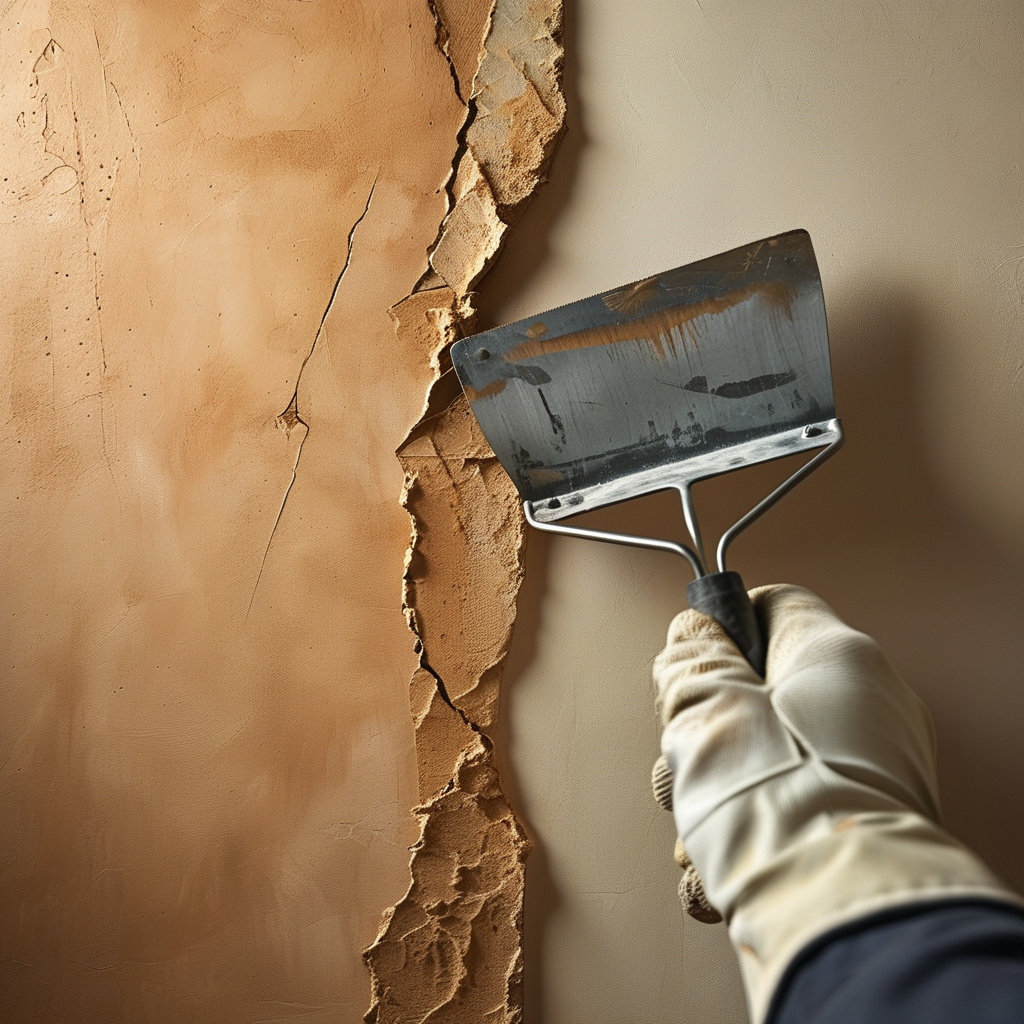
Stucco cracks because buildings move. Settlement, thermal cycling, hurricane wind load, and water intrusion all leave their mark on a South Florida wall. Painting over the damage hides it for a season, not for a decade.
We patch every hairline, repair blown-out corners, re-skim damaged sections, and hand-texture the patches to match the surrounding wall. Sand finish, lace, knockdown, or dash, we work to blend.
Where the building condition warrants it, we spec an elastomeric wall coating over the repair to bridge any future hairline movement and add a waterproof layer. Where it does not, a high-build acrylic is the better call. We will tell you which.
Hairline mapping, hollow-spot tap test, sealant audit, moisture check at suspect areas. Documented before any work.
Hairline sealant, blown-out corner rebuild, settlement crack stitching where required. Cured before texture.
Scratch, brown, and finish coats where full re-stucco is needed. Matched to original substrate and texture.
Sand, lace, knockdown, dash, or Spanish. Hand-finished to blend with the surrounding wall before priming.
Window perimeter, control joints, and dissimilar-material transitions sealed with paintable, mildew-resistant sealant.
Masonry primer over patches, then full body and trim coats specified for South Florida sun and salt air.
Hairline cracks, settlement cracks, blown-out corners, water-damaged sections, missing patches around windows and doors, and bonding failures where stucco has separated from the substrate. We patch, re-skim, and re-texture to match the surrounding wall.
Before. Stucco repair belongs under the paint, not over it. We complete every patch, sealant, and texture match, let it cure properly, then prime and paint. Repairs done after paint show as a different texture and color.
Yes. Sand finish, lace, knockdown, dash, and Spanish texture matches are part of standard stucco repair scope. We hand-finish patches to blend with surrounding wall texture before priming.
Elastomeric wall coatings are used when the building has widespread hairline cracking, prior settlement, or coastal water exposure. Elastomeric bridges hairline cracks and adds a waterproof layer over the stucco. It is not always the right answer; sometimes a high-build acrylic is better.
Yes. Expansion-joint caulking, window perimeter sealant, control-joint sealing, and dissimilar-material transitions are routine on every stucco project. Sealant failure is the leading cause of stucco water intrusion in South Florida.
Repairs done first last for years. Repairs done after the paint show as patches in a season.